
UX CASE
How might we transform mechanical assistance for road transport?
3 months, 2025
Transport & logistics
B2B
App
Product Designer
Every day, around 2.5 million trucks travel thousands of kilometers transporting essential goods across the economy. When a vehicle breaks down mid-route, every minute stopped means danger, delays, and financial loss.
Finding a solution depended on improvised processes, and more often than not, there was no guarantee of service quality or fair pricing. That's the context in which Frota Advisor was born, a platform built to connect truck drivers, carriers, and service providers through an experience grounded in speed, reputation, and trust.
Throughout this project, I led the product design process from end to end, from user research and strategy definition to building an MVP, validated at one of the country's leading logistics events.
The project in numbers
25%
conversion rate at the event's first public demo
1,200
new providers in 2 months
Understanding the people behind the problem
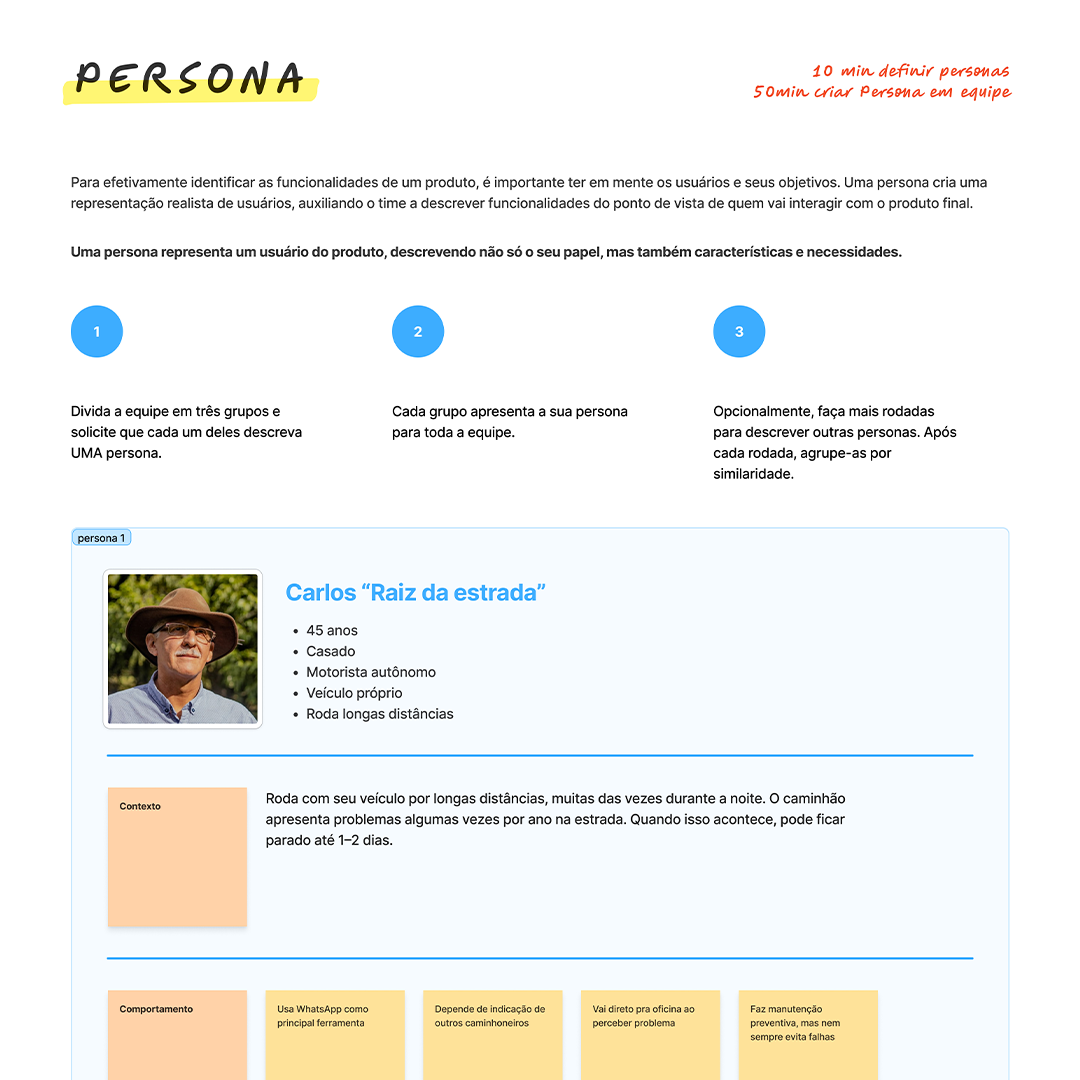
As we began investigating the landscape, we realized the problem involved an ecosystem of three distinct actors, each facing different challenges, but all sharing the same dependency on an unstructured process to connect with one another.
Drivers
When a vehicle breaks down on the road, the only goal is to get back moving as fast as possible. With limited technical knowledge, most decisions are made based on trust and whoever happens to be available.
Carriers
Every vehicle stopped means delays, operational costs, and missed deliveries. In emergency situations, finding a reliable service provider is slow and unpredictable.
Service providers
Even with a steady flow of daily calls, most professionals rely on referrals to find new clients. Limited visibility restricts their reach and makes it harder to connect with those who actually need their help.
Improvisation was the process
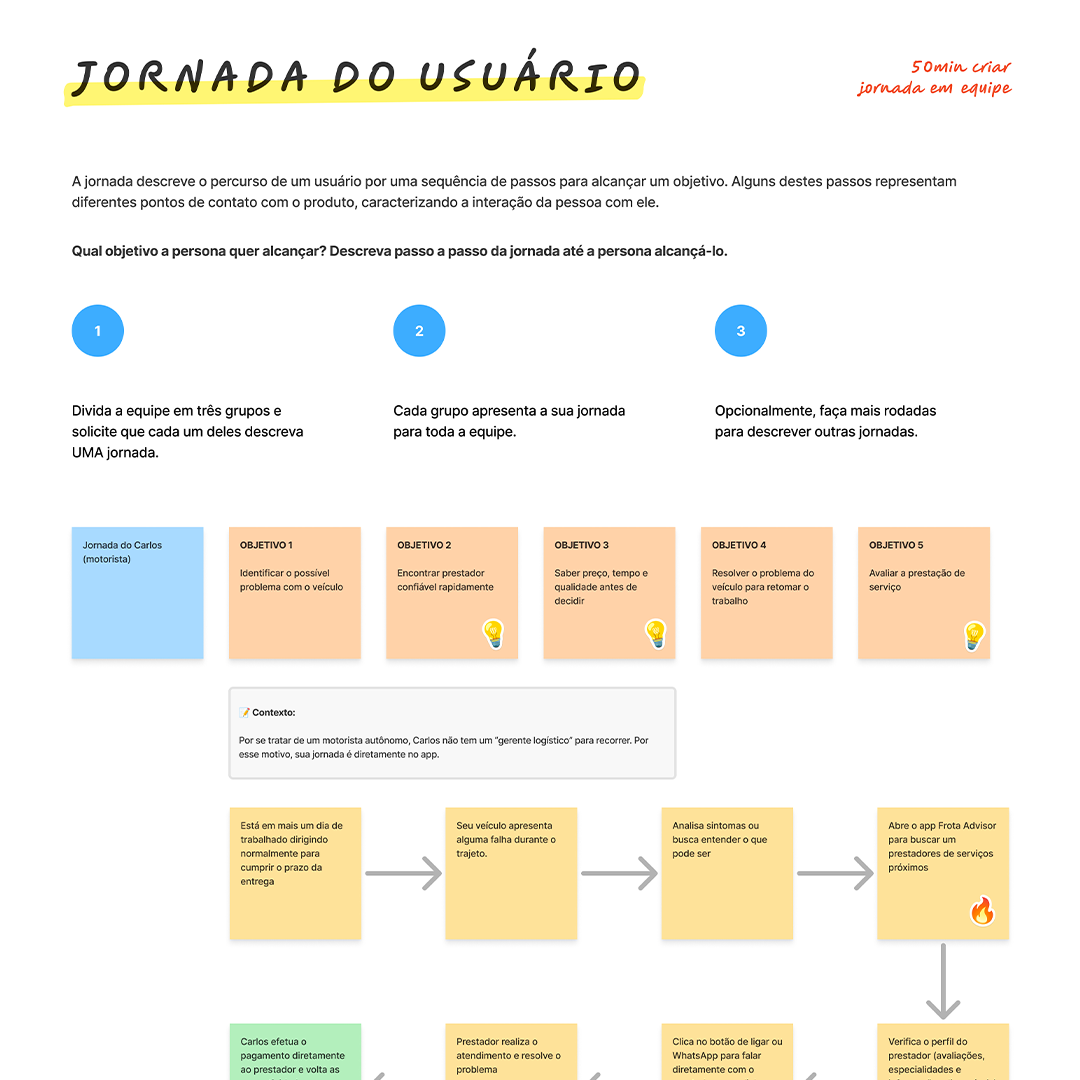
As we looked into how each profile handled emergency situations, a clear pattern emerged: everyone depended on improvised ways to connect. Decisions were made with limited information, increasing uncertainty and the risk of a bad choice.
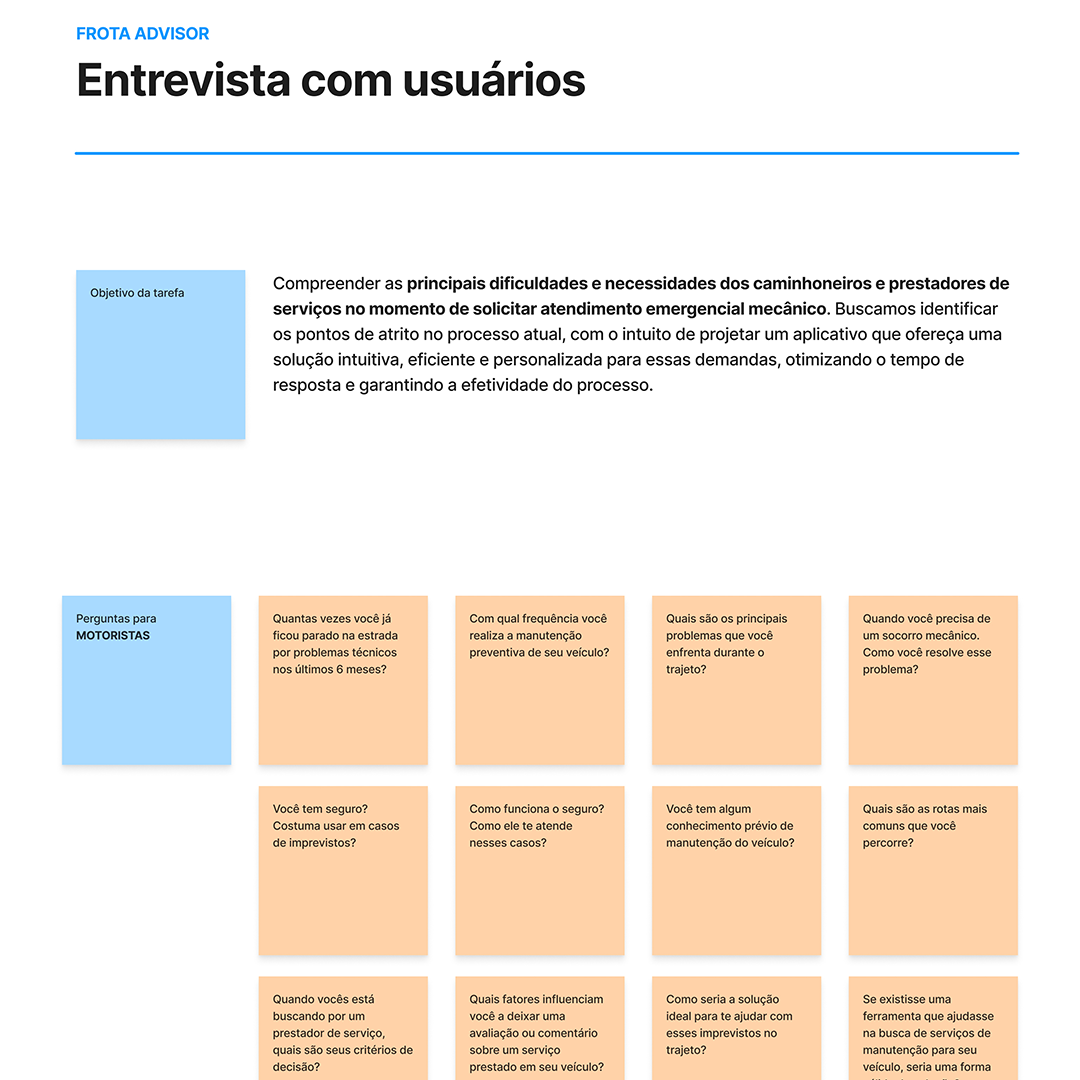
To understand this better, we conducted interviews with representatives from all three profiles. Despite different perspectives, certain challenges and patterns came up consistently.
Key challenges identified
• Lack of reliable information about service providers;
• Dependence on informal referrals (WhatsApp groups, gas stations, personal contacts);
• Risk of overpriced or low-quality services;
• High downtime costs (R$3,000 to R$5,000 per incident);
• Manual and unscalable processes.
Research insights
• The search for providers is reactive and driven by urgency;
• Trust is the single most important decision factor;
• WhatsApp groups are the primary tool currently in use;
• Carriers operate with improvised processes;
• Service providers depend on referrals and informal networks.

Turning research into product
The research made it clear that the challenge wasn't just about finding providers, it was about offering enough information for drivers and carriers to make decisions with confidence. The strategy was to build an MVP focused on what mattered most: speed, reputation, and trust.
Trust
Building an ecosystem where reputation drives decision-making, balancing supply and demand through network effects.
Experience
Reducing decision-making time and downtime by delivering a simple, fast, and intuitive journey.
Scale
Ensuring performance and data quality to sustain the platform's growth.
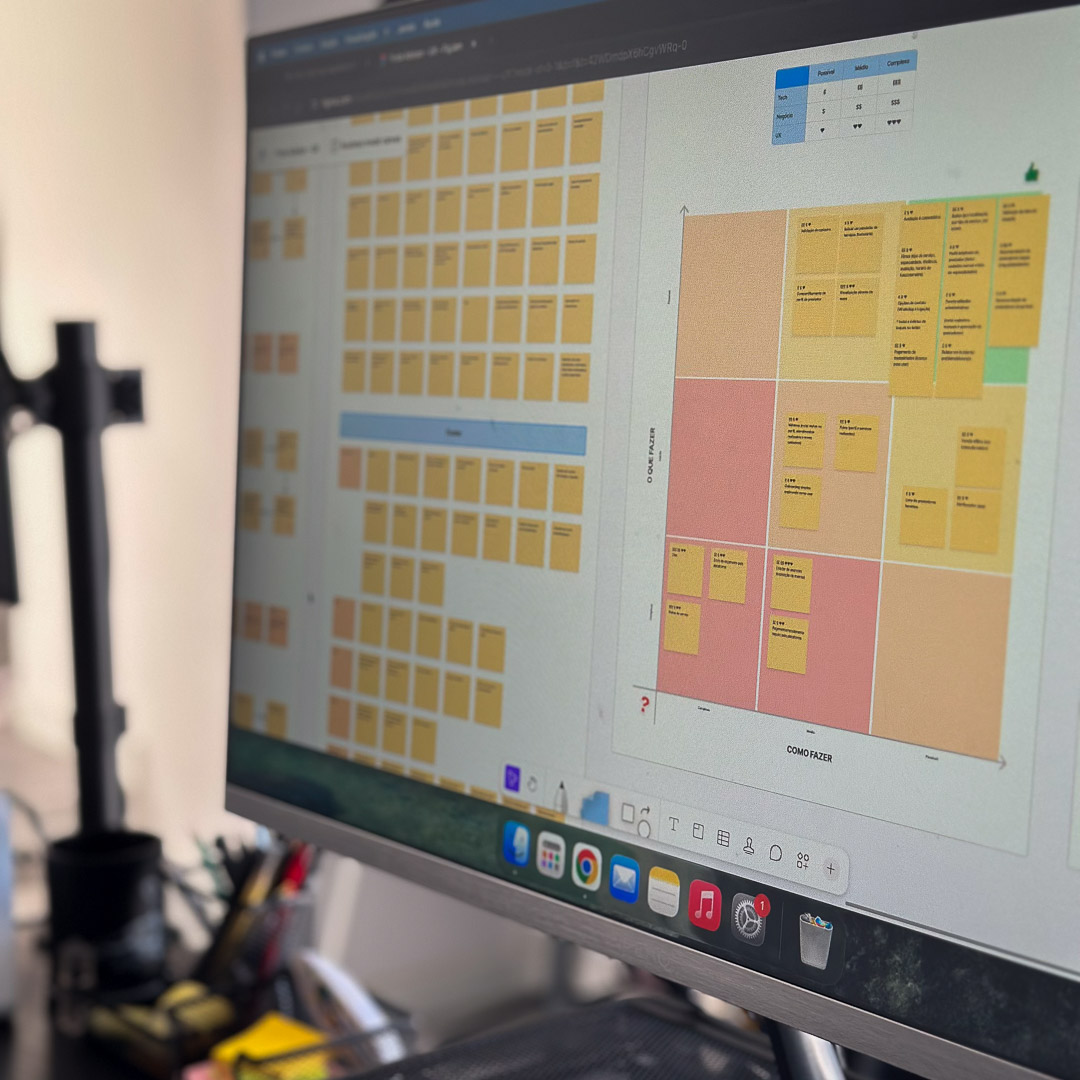
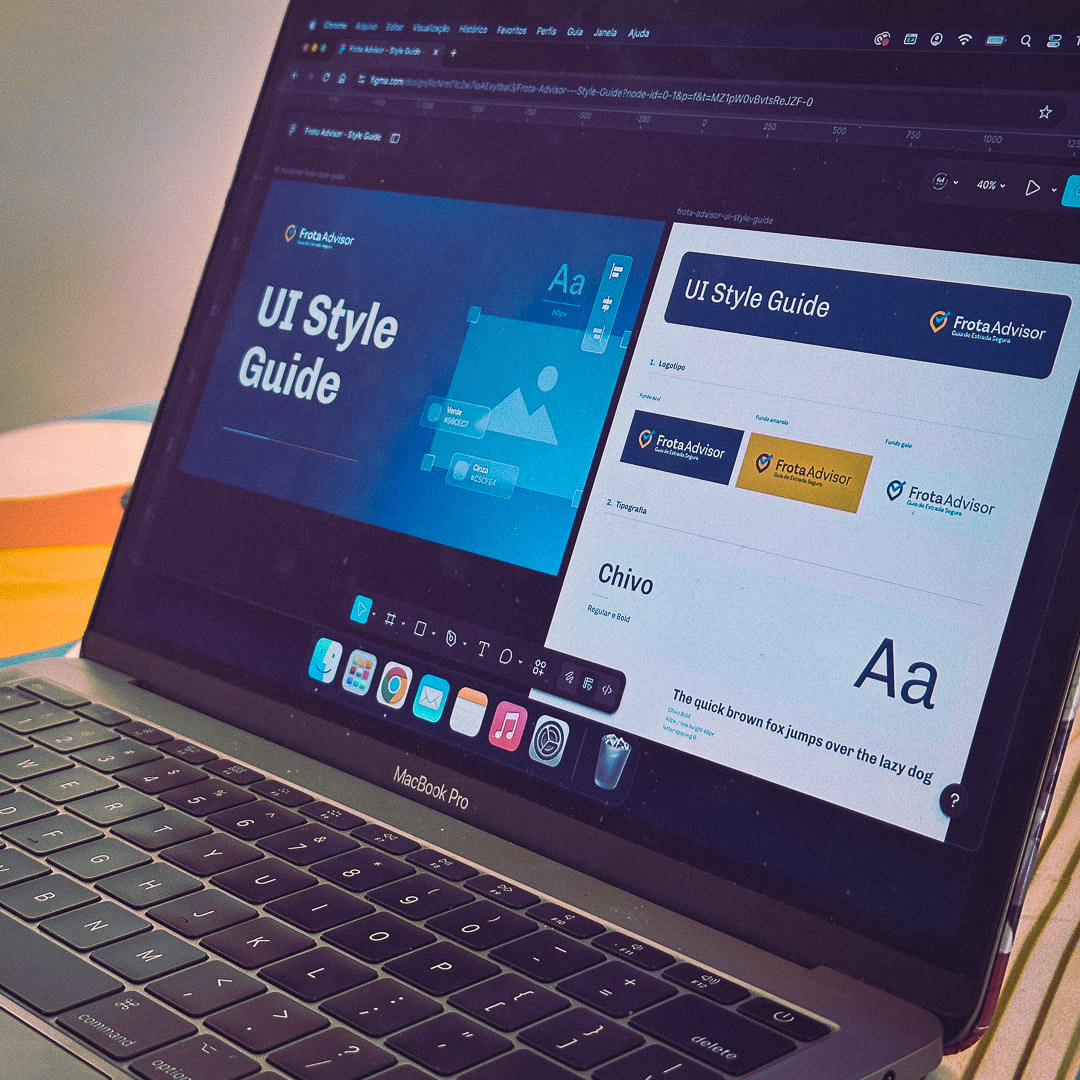
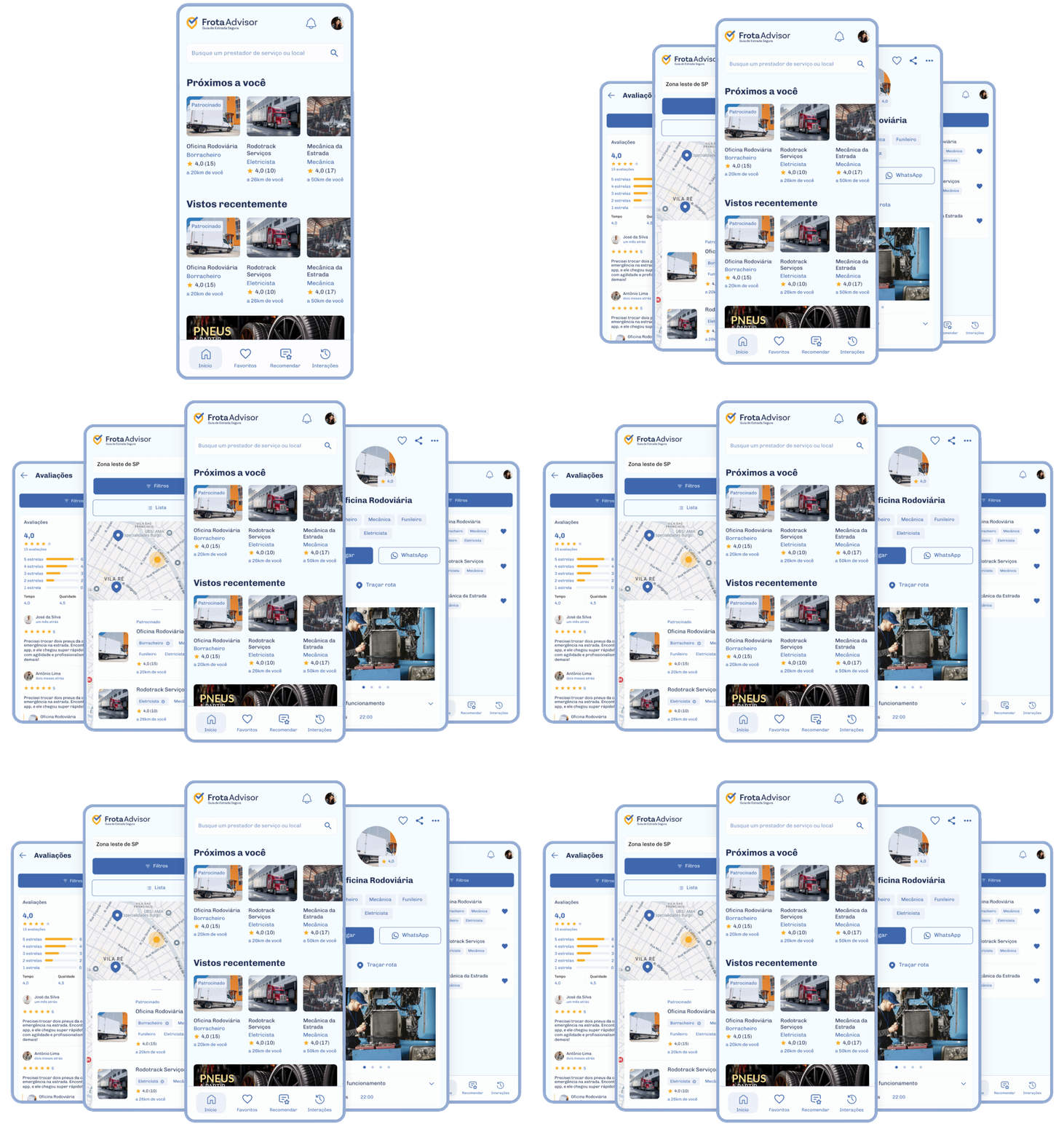
Designed around the essentials
• Find help quickly
• Build trust before the first contact
• Provide evidence of service quality
• Enable immediate contact
• Surface providers who can actually help
• Curation for service provider approval
Early signs of validation
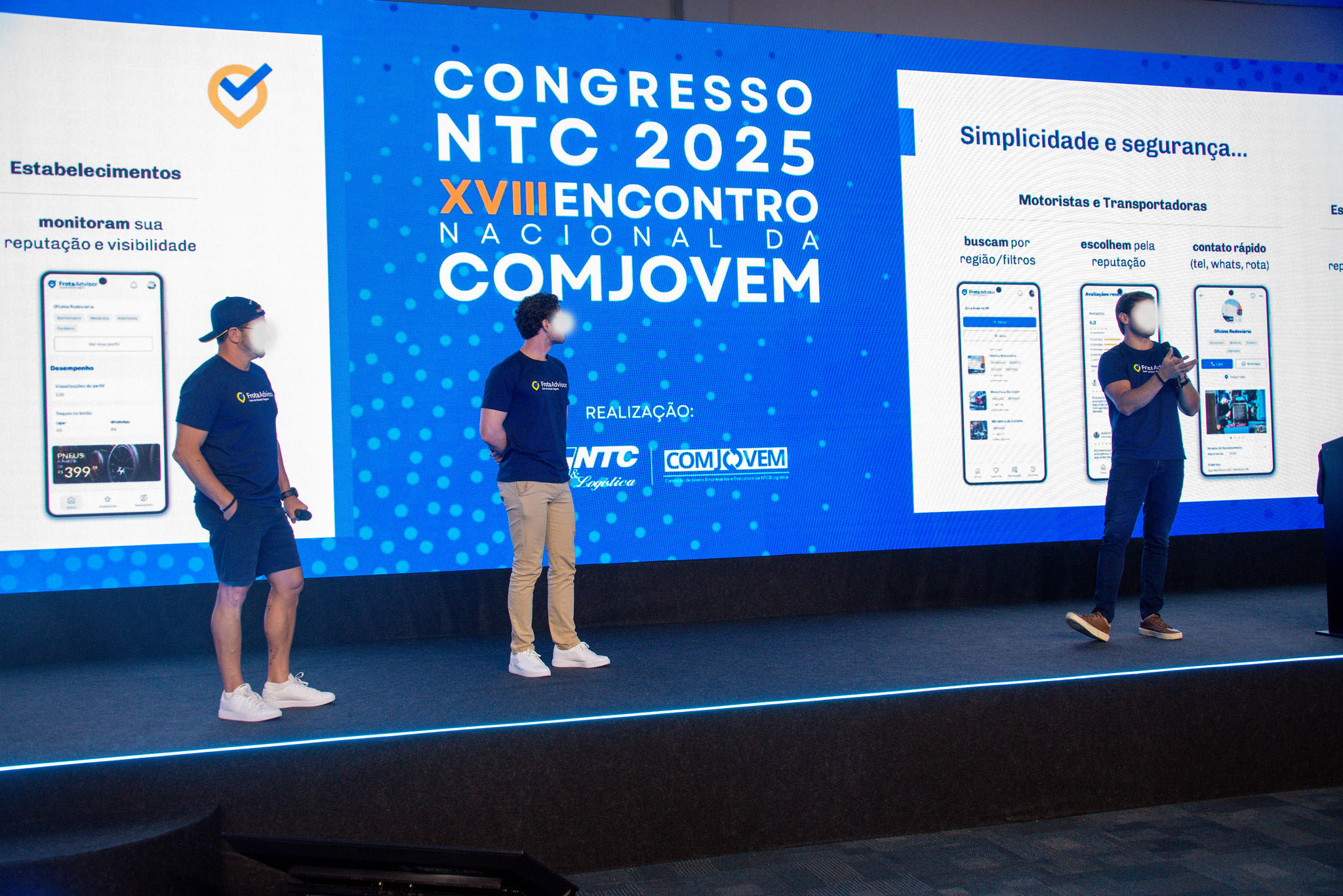
The MVP was launched at CONET & Intersindical 2025, where it attracted 100 new sign-ups from approximately 400 attendees. These early results validated the product's value proposition. Product success would then be tracked through metrics such as:
• New sign-up rate;
• Average time to find a provider;
• Average number of contacts per provider;
• Number of reviews and average provider rating;
• Active user count;
• Geographic coverage.
What we learned
Frota Advisor showed that major opportunities don't always come from building new technology, sometimes they come from bringing structure to processes that already exist informally.
This project reinforced how much it matters to start with people. Throughout the process, we turned research into strategy and made product decisions grounded in evidence. Seeing the product launch and earn 100 sign-ups at its very first public demo was the confirmation that we were solving a problem that was real.